
Harvests, sowings, trial results
News and advice from Charles to you

These Sonnenherz yellow oxheart tomatoes have been super abundant, grown without feed or fertiliser. The water I use has passed through magnets to structure it, making it more hydrating for plants.
When soil is fertile thanks to no dig and annual applications of organic matter on the surface, it’s amazing what you can easily grow. See my video about these unfed but highly nourished tomato plants, cucumbers too.
In fact, everything grows strongly, from the same soil preparation. It’s easier than you often hear.

Sow as soon as you can
There are still sowings you can make, both under cover and outside. Such as salad rocket, mizuna, claytonia / winter purslane, chervil and land cress. If sown under cover, as above, there is still just time for spring cabbage and spring onion.
Also any salads to grow undercover, want sowing now. Then they will be ready for transplanting after you remove tomatoes, cucumbers, aubergines, basil, and so forth.
Contrary to what you may read, it's way too early for sowing broad beans. They would shoot up quickly and have long stems which will be killed by frost. I find that the last week of October, or the first week of November work best, here at least. And from October onwards you can plant garlic, make sure you have cloves to pop i. I found Messidrome was the best this year.
See my Calendar 2027 for more sowing advice. It’s available printed, and in digital.

Drills made with my wooden dibber, for seeds of lambs lettuce / corn salad. These are the same beds as you see below, after I had brought the squash into the house to ripen.

Squash harvest from my Three Strip Trial, two plants per bed - see short video
Three Strip Trial squash, remarkable difference in harvest
We fork soil of the first bed (closet to camera) every December, it gave 7.44kg Uchiki Kuri winter squash. We planted them on 21st May, after twisting out the February-sown spinach.
The second bed is no dig, and both the first and second bed receive the same amount of the same compost, which is a 50-50 mix of mushroom compost and green waste compost. This bed gave 13.1kg squash.
The third bed is also no dig, and receives compost from the garden toilet, which has already aged for one year before we empty it in December to spread here. Every year that we do this, harvests are bigger from the toilet compost, this year it was 20.54kg of squash.
And this line of three beds already gave 28kg spinach from a February sowing.

Harvests of Candy Roaster and Crown Prince. These plants were not watered at all, except in their first week of getting established in late May.
The squash above will be brought into my house eventually, when there is room. The okay outside for a while, until it turns colder.

Trial beds 11th September, no dig in front and dig behind. Left to right is fennel, parsnips, leeks, endive, kale, chicory, celeriac, beetroot, and dwarf beans.
Trial beds
This summer it's been fascinating to observe the differences in my trial beds, in their 14th year. Both receive the same amount of compost. See this short video on the differences in water infiltration.
It looks like the dig bed’s plants are struggling to find sufficient water, and growth since July has been more different than usual. Look how seven only of the 12 chicory plants have survived on the dig bed, and they are much smaller.
Harvests so far are 67kg no dig, 63kg dig. All the plantings above have succeeded earlier vegetables.
Interplant

After I cut stems of two cucumber plants to remove them to compost, making visible the Florence fennel and kohlrabi.
Many sowings and plantings can be made between existing vegetables, such as the fennel between cucumber above. See my book Grow Together.

5th September just before the open day. We had had some rain during the previous two weeks.

Big crowds at my Open Day
Open Day 6th September
Thanks to all of you who came and made this such a vibrant event. The garden was looking lush and I had written many signs to explain what was happening.
The revenue from selling tickets went to Ripple Effect and Promise Works charities, over £2500 each.

Speaking at Jersey Regen Festival

Laura with her tomatoes, on land reclaimed from potato growing - the soil was dead. She and Rachel had the soil scraped off, then made no dig raised beds, with some wood at the bottom.
Jersey Festival
It was a great pleasure to meet so many amazing people at this event, manyy also from Guernsey. The two islands, although small have a combined population of 150,000 and there's a lot going on there.
Farming used to be chemically grown tomatoes and potatoes. Laura above who I stayed with is reclaiming, bit by bit, soil that was dead after decades of glyphosate, cultivations and artificial fertilisers, with no seaweed or other organic amendments. The ground was even left bare between each potato harvest.
There is noe a strong movement to correct this, and it's very much from the ground up, with so many people involved.
Fundraising for health
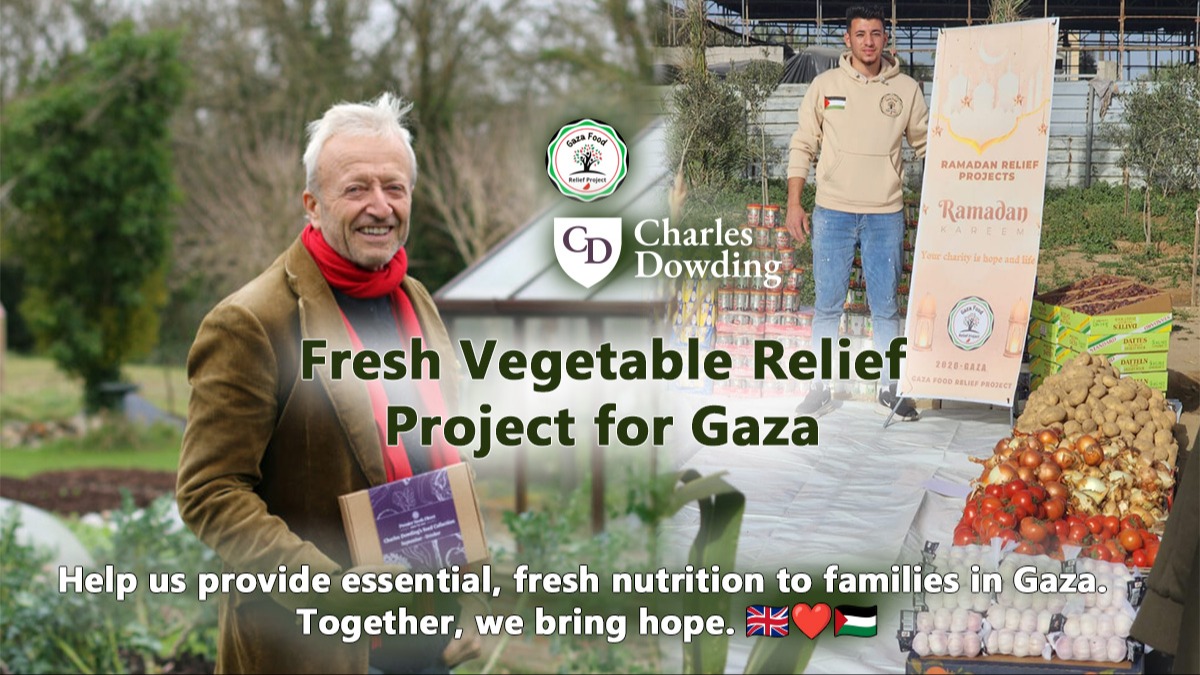
I’m working with Mohammed Ayaa to raise money for feeding vegetables to Gazan families who are unable to grow or access their own food. With your donations, he can buy fresh produce from the market, and water too, to disribute to those in need, see this Chuffed page.
